





Nas redes modernas de backhaul móvel e Ethernet de nível de operadora, o mecanismo de OAM (Operações, Administração e Manutenção) é a base para garantir a continuidade dos negócios e a rápida localização de falhas. Quer se trate de uma rede de telecomunicações tradicional ou de uma nova arquitetura IP/MPLS/PTN, a falta de testes precisos de OAM significa a incapacidade de quantificar os SLAs e isolar rapidamente as falhas. Este artigo se aprofundará nos três principais padrões de OAM a partir da perspectiva de um engenheiro de tecnologia de rede - IEEE 802.1ag, ITU-T Y.1731 e ITU-T G.8113.1 - e demonstrará como realizar testes integrados precisos e de vários padrões em cenários práticos de engenharia usando o Testador de Ethernet TFN T5500A.
Por que o teste de OAM é necessário?
À medida que a Ethernet evoluiu de redes locais (LANs) para redes metropolitanas (MANs) e redes de longa distância (WANs), as verificações simples de conectividade tornaram-se insuficientes para atender às demandas de operação e manutenção de nível de operadora. O setor precisava de um método padronizado para gerenciamento de falhas e monitoramento de desempenho, e o OAM foi desenvolvido exatamente para esse fim. Ele permite:
- Verificação de conectividade (CCM/LBM)
- Alarme e localização de falhas (AIS/RDI)
- Coleta de métricas de desempenho (atraso, jitter, perda de pacotes)
- Loopback remoto e diagnóstico
Entretanto, existem diferenças entre os protocolos OAM definidos por várias organizações de padrões. Portanto, o equipamento de teste deve ter compatibilidade multiprotocolo para lidar com a realidade dos ambientes de rede híbrida.
Quais são os três principais padrões de OAM?
1. IEEE 802.1ag: Gerenciamento de falhas de conectividade
O IEEE 802.1ag, também conhecido como CFM (Connectivity Fault Management, gerenciamento de falhas de conectividade), define principalmente mecanismos para verificação de conectividade de ponta a ponta e isolamento de falhas em redes Ethernet com ponte. Ele introduz conceitos como domínios de manutenção, associações de manutenção e pontos de manutenção (MEP/MIP). Ele monitora o status do link enviando CCMs (Continuity Check Messages) e oferece suporte a ferramentas de diagnóstico como LBM/LBR (Loopback) e LTM/LTR (Linktrace).
Padrão IEEE para redes locais e metropolitanas - Redes locais com ponte virtual Alteração 5: Gerenciamento de falhas de conectividade, IEEE Std 802.1ag-2007.
Para os engenheiros de campo, o 802.1ag ajuda a determinar rapidamente se uma falha ocorre no lado do cliente, na camada de acesso ou na camada central, formando a base para o teste do segmento de rede.
2. ITU-T Y.1731: monitoramento de desempenho e integração de OAM
Y.1731 é a estrutura definida pela ITU-T para Ethernet OAM. Ele não apenas incorpora os recursos de gerenciamento de falhas do 802.1ag, mas também os amplia com funcionalidades de monitoramento de desempenho. O Y.1731 é compatível com:
- Medição de atraso de quadro (1DM/DMM/DMR)
- Variação do atraso do quadro (Jitter)
- Medição de perda de quadros (LMM/LMR/SLM/SLR)
- Teste de rendimento (opcional)
Essas métricas correspondem diretamente aos principais parâmetros dos SLAs e são essenciais para redes que transportam serviços de voz, vídeo e 5G. O Y.1731 também pode funcionar em conjunto com o 802.1ag para fornecer uma visão unificada das falhas e do desempenho.
Recomendação ITU-T Y.1731 (02/2008), funções e mecanismos OAM para redes baseadas em Ethernet.
3. ITU-T G.8113.1: MPLS-TP OAM
Com a crescente prevalência do MPLS-TP (Multiprotocol Label Switching - Transport Profile) em serviços de backhaul móvel e de linhas alugadas, surgiu o padrão OAM correspondente G.8113.1. Com base nos mecanismos principais do Y.1731, ele é otimizado para as características de transporte de pacotes do MPLS-TP. Ele oferece suporte à verificação da conectividade, à supressão de alarmes e ao monitoramento do desempenho ao longo dos caminhos MPLS comutados por rótulos. A introdução do G.8113.1 permite que as redes MPLS-TP possuam recursos abrangentes de OAM semelhantes aos do SDH, mantendo a eficiência da multiplexação estatística.
Recomendação ITU-T G.8113.1 (05/2012), Mecanismo de operações, administração e manutenção para MPLS-TP em redes de transporte de pacotes.
Em cenários práticos de rede, as operadoras geralmente precisam manter simultaneamente segmentos de Ethernet pura e segmentos de MPLS-TP. Portanto, os instrumentos de teste devem ser compatíveis com todos os três padrões OAM mencionados acima.
Principais desafios no teste de OAM
Os engenheiros que realizam testes de OAM no campo ou no laboratório geralmente enfrentam os seguintes problemas:
1. Intercalação de protocolos: Um único link físico pode transportar simultaneamente mensagens CCM 802.1ag e quadros de medição de desempenho Y.1731. O testador precisa ser capaz de classificar e coletar estatísticas sobre eles separadamente.
2. Dependência de sincronização de tempo: Medições precisas de atraso/jitter exigem que o testador esteja sincronizado com o relógio da rede; caso contrário, os resultados serão distorcidos e perderão o valor de referência.
3. Identificação de fluxo massivo: Em redes ativas, pode haver centenas de fluxos de serviço, cada um exigindo monitoramento OAM independente.
4. Simulação combinada com tráfego real: Ao testar o OAM, muitas vezes é necessário injetar tráfego em segundo plano para avaliar seu impacto nos serviços reais.
Ferramenta prática: O testador de Ethernet TFN T5500A
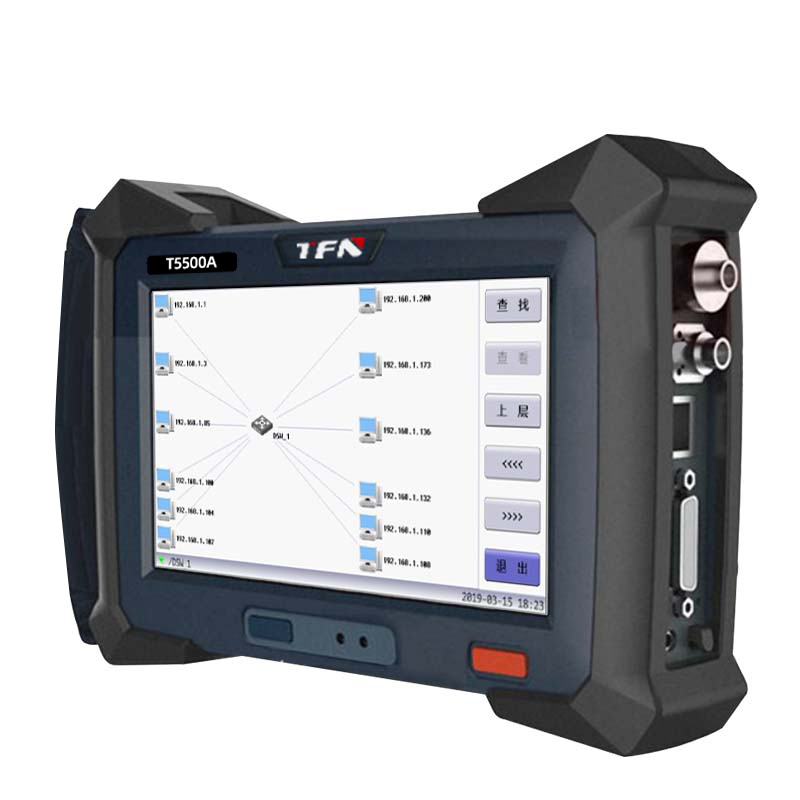
Diante dos desafios acima, um testador de Ethernet profissional e multifuncional é uma ferramenta indispensável para os engenheiros. O TFN T5500A 10 Gigabit Network Comprehensive Tester é exatamente uma plataforma modular que integra os recursos de teste IEEE 802.1ag, ITU-T Y.1731 e G.8113.1 OAM.
De acordo com o manual do produto, o T5500A é baseado na plataforma inteligente FT100, com suporte para testes de Ethernet de taxa total de 10M a 10G. Ele oferece os seguintes recursos fortemente relacionados ao OAM:
- Cobertura abrangente de protocolos: Oferece suporte à geração e à recepção de todas as principais mensagens OAM definidas pelo Y.1731, incluindo CCM, LBM/LBR, LTM/LTR, AIS, LCK, TST, MCC, LMM/LMR, 1DM, DMM/DMR, EXM/EXR, VSM/VSR, SLM/SLR. Também é compatível com o conjunto completo de mensagens IEEE 802.1ag CFM e IEEE 802.3ah Link OAM.
- MPLS-TP OAM: Totalmente em conformidade com o padrão ITU-T G.8113.1, permitindo CCM, loopback, rastreamento de link e monitoramento de desempenho em redes MPLS-TP.
- Teste simultâneo de vários fluxos: A interface 10G suporta a geração e a análise de até 512 fluxos de dados simultaneamente. Cada fluxo pode ser configurado com sessões OAM independentes, atendendo às demandas de monitoramento de serviços em grande escala.
- Validação da qualidade da sincronização do relógio: As funções integradas de teste SyncE (Synchronous Ethernet) e IEEE 1588v2 PTP permitem avaliar a precisão da distribuição do relógio da rede, garantindo a precisão das medições de desempenho do Y.1731.
- Simulação e injeção de falhas: Oferece suporte à inserção de erros como erros de FCS, erros de soma de verificação de IP, erros de CRC4 e simulação de vários alarmes (por exemplo, AIS, RDI) para verificar as respostas do elemento de rede aos eventos OAM.
- Loopback inteligente remoto: Suporta configurações de loopback da Camada 1 à Camada 4 e permite a perda controlada de pacotes ou a injeção de erros ao longo do caminho de loopback, facilitando o teste de extremidade única.
Citando descrições específicas do manual do produto: “ITU-T Y.1731: CCM, LBM, LBR, LTM, LTR, AIS, LCK, TST, MCC, LMM, LMR, 1DM, DMM, DMR, EXM, EXR, VSM, VSR, SLM, SLR;IEEE802.1ag: CCM, LBM, LBR, LTM, LTR;IEEE802.3ah: informações, solicitação variável, resposta variável, controle de loopback.” Isso indica que o T5500A abrange praticamente todos os itens de teste de OAM exigidos nas redes ativas atuais.
Além disso, o T5500A oferece a funcionalidade de captura de mensagens OAM, suportando a exportação de dados no formato CAP para análise usando o Wireshark, facilitando o diagnóstico detalhado. A tela sensível ao toque de 6,5 polegadas para ambientes externos e a bateria com duração de 12 horas também garantem facilidade de operação e confiabilidade em ambientes de campo.
Conclusão: Garantia da confiabilidade da rede com testes precisos de OAM
Seja para gerenciamento de falhas com o 802.1ag, monitoramento de desempenho com o Y.1731 ou aplicativos em ambientes MPLS-TP usando o G.8113.1, os padrões OAM evoluíram de opcionais para essenciais. Como engenheiros de rede, precisamos dominar completamente esses protocolos e utilizar testadores de OAM avançados para verificar se a rede atende às expectativas do projeto. Com seu suporte abrangente a protocolos, medição de alta precisão e recursos de simultaneidade de vários fluxos, o TFN T5500A oferece uma solução integrada que é “abrangente em itens de teste e precisa em medição” para operadoras, fabricantes de equipamentos e integradores. Na era do 5G e da convergência de rede em nuvem, somente testes sólidos de OAM podem cumprir os compromissos de SLA de alta qualidade.
Se você quiser saber mais sobre Testador de Ethernet 10G TFN T5500A, Entre em contato com a equipe de suporte da TFN:
E-mail: info@tfngj.com
WhatsApp: +86-18765219251
Ou você pode Deixe sua mensagem aqui