





Fusion splicers instantly connects two fibers placed left and right on the apparatus by fusing the end surfaces of the fibers at a high temperature (approximately 1,800°C) created by arcing. And with the rapid growth of communication technologies such as 5G and FTTx, the demand for maintaining and repair optical fibers has been increasing. According to public data, the global splicer market is expanding consistently, with sales expected to reach US$530 million in 2023 and grow to US$930 million by 2030, representing a CAGR of 8.44%. Among global markets, Asia Pacific and North America account for approximately 70% of market share in 2023.
This growing market demand has fueled technological innovation, and users are increasingly seeking cost-effective fusion splicers. Among the options available, TFN fusion splicers stand out for their high efficiency, precision, and reliability, making them a popular choice for professionals worldwide.
Key Factors to Consider When Choosing A Fusion Splicer
Choosing the right one requires evaluating several key factors, since different models offer different features, performance levels, and application scenarios.
- Users should define their splicing requirements—including the fiber type, fiber length, and expected splicing volume. This includes determining whether the project involves single-core fibers, drop cables, pigtails, or ribbon fibers; verifying whether the fiber length is suitable, since longer fibers typically require more splicing time; and estimating how many splicing operations the device needs to handle. Clarifying these needs will help users select the most appropriate fusion splicer model and configuration.
- Pay close attention to key performance indicators such as splicing loss, splicing speed, heating time, arc stability, and overall ease of operation. These factors directly influence splicing quality and work efficiency. Lower splicing loss indicates better optical performance, while higher arc stability ensures more consistent results. Splicing and heating speeds should meet the requirements of the specific project, and the operating process should be intuitive—overly complex procedures will negatively affect the user experience.
- Consider the brand and the quality of after-sales service. Choosing a reputable supplier helps ensure product quality, stable performance, and reliable technical support. It is also important to review the brand’s market reputation and customer feedback to make a well-informed decision.
- Price is another key factor. Since different fusion splicer brands and models vary widely in cost, users should select a cost-effective fusion splicer that fits their budget. In other words, the chosen product should meet performance requirements while offering a reasonable and competitive price.
By carefully considering splicing needs, performance, brand reliability, price, and feedback, you can choose your right fusion splicer and improve both splicing quality and work efficiency.
TFN: Advanced and Reliable Performance
TFN fiber optic fusion splicers are widely recognized for its brand strength, innovation, user-friendly operation, and excellent after-sales service. With decades years of R&D experience in optical communication, TFN prioritizes technological innovation to meet the needs of modern network deployment.
The features include:
- Advanced splicing technology and high-precision optical systems that reduce splicing losses.
- Intelligent operating systems for easier and faster splicing.
- Long-lasting batteries for uninterrupted operation.
- Multi-functional design suitable for trunk lines, radio & television, telecom operators, and other applications.
With continuous product updates and rigorous quality control, TFN ensures that its fiber fusion splicers meet user expectations in both performance and reliability.
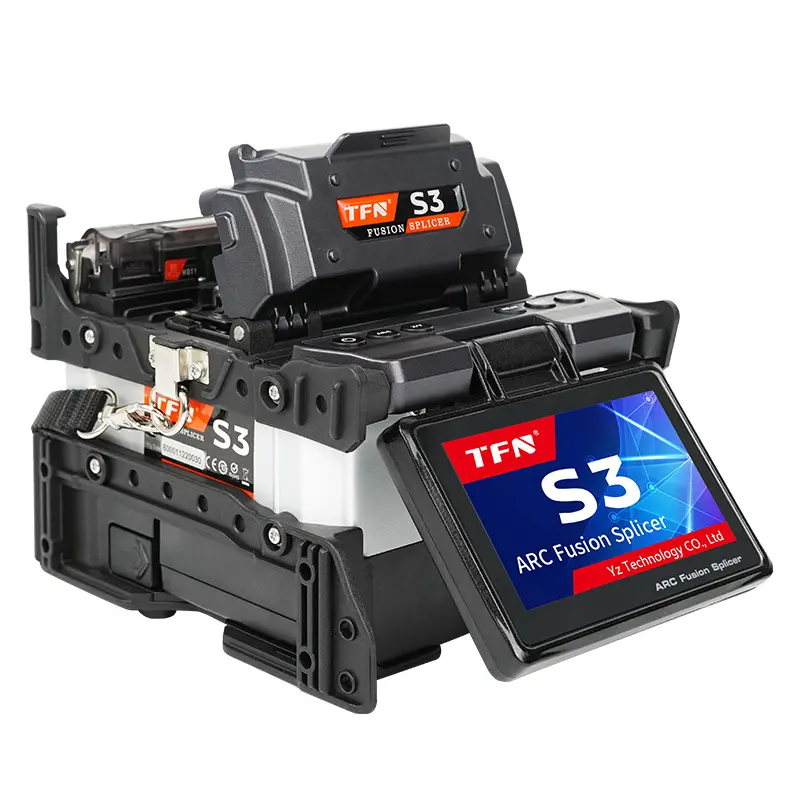
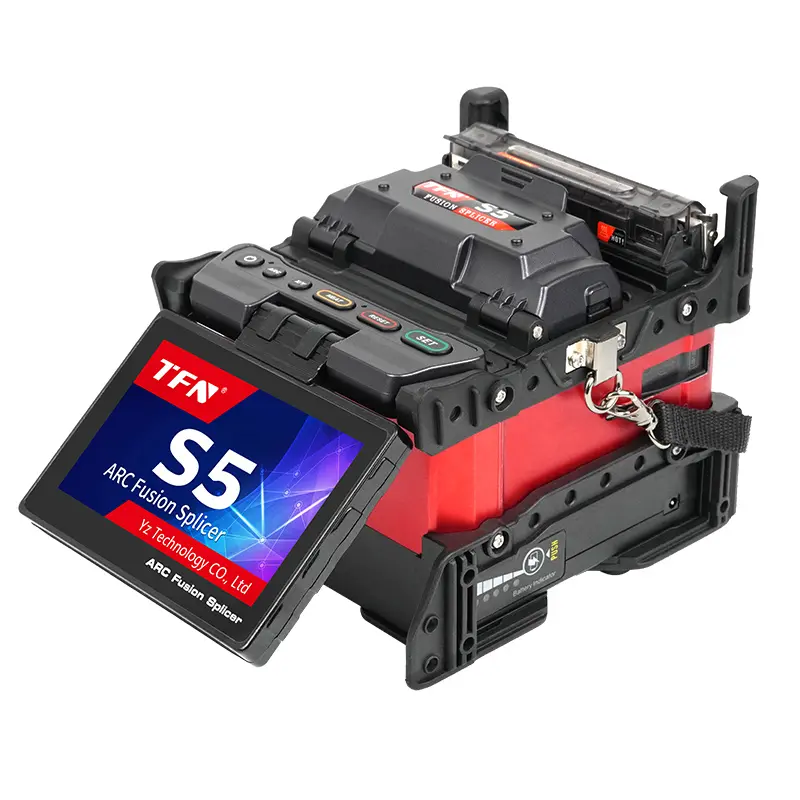
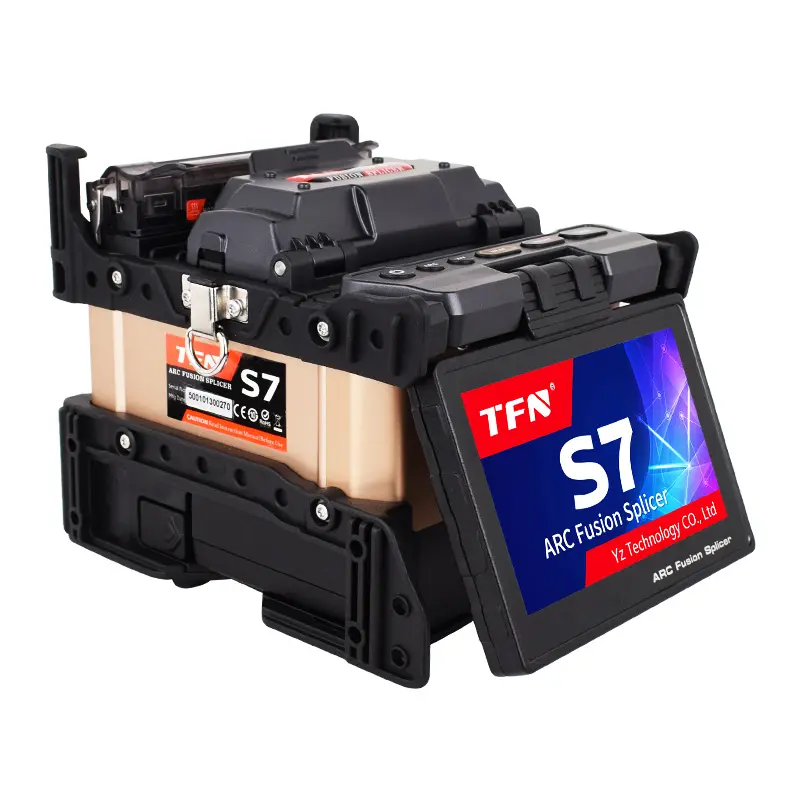
We offers multiple series of fiber optic fusion splicers, including M, FT, and S series, catering to various project needs. Among these, the S series (S3, S5, S7) is particularly popular.
Key features of the S-series:
- Fast splicing and heating: standard welding time is 7 seconds, extreme speed 6 seconds, heating time 20 seconds.
- High core amplification: 500× magnification for precise alignment and quality inspection.
- Three-in-one clamps: suitable for different fiber types, reducing operator errors.
- Durable and portable: waterproof, dustproof, shockproof, lightweight, and equipped with a 5200 mAh battery for extended operation.
So what scenarios are S3, S5, and S7 respectively suitable for?
S3 is a four-motor model for 50 km trunk lines, urban networks, security monitoring, and community installations.
S5 is a six-motor model for community access, long-distance trunk lines, and data centers.
S7 is a six-motor model for 100 km trunk lines, emergency maintenance, base stations, and large-scale signaling projects.
Choosing the right fiber optic fusion splicer can significantly improve the splicing process and overall efficiency. TFN provide advanced technology, reliable performance, and excellent user experience, making them a preferred choice for professionals in the optical communication industry. By understanding your splicing needs of fiber optic, evaluating performance, and considering brand and cost-effectiveness, you can confidently choose your right fusion splicer for your projects.