




L'efficacité des opérations des réseaux de communication modernes dépend fortement d'un contrôle précis de l'infrastructure physique. Dans les réseaux de câbles optiques denses, l'identification rapide et précise d'une fibre cible est un défi fondamental mais critique auquel sont confrontés quotidiennement les ingénieurs de terrain. La technologie OCID (Optical Cable Identifier), l'outil professionnel conçu pour résoudre ce problème, permet une identification non destructive et précise des fibres. Cet article se penche sur les principes de fonctionnement de la technologie OCID, explore ses applications pratiques dans divers scénarios et clarifie sa valeur économique significative.
1. Principe fondamental de la technologie OCID : Identification de précision non destructive
Pour comprendre la technologie OCID, il faut d'abord se débarrasser de la notion traditionnelle de “nécessité d'interrompre le service pour l'identification”. Les principaux avantages d'un testeur OCID moderne résident dans sa nature non intrusive et dans sa capacité d'identification de haute précision.
1.1 Principe de modulation et de détection
La technologie est basée sur la modulation optique et la détection des signaux faibles. Un dispositif d'identification de câble optique typique se compose d'un émetteur et d'un récepteur.
- Extrémité de l'émetteur : Injecte un signal lumineux de test de faible puissance, modulé à une fréquence spécifique (généralement une onde sinusoïdale de 270 Hz, 1 kHz ou 2 kHz), dans la fibre cible. Ce signal modulé agit comme une “étiquette d'identification” unique pour l'onde lumineuse. Sa puissance est nettement inférieure à celle du signal de service, ce qui garantit qu'il n'interfère pas avec la transmission normale du trafic.
- Extrémité du récepteur : La sonde d'identification portable utilisée par l'ingénieur contient un capteur photoélectrique très sensible. Lorsque la sonde s'accroche à la gaine du câble testé, elle détecte le signal lumineux modulé de la fibre qui fuit de façon infime. Le circuit de filtrage du récepteur extrait avec précision cette fréquence de modulation spécifique et la convertit en une alerte visuelle (par exemple, un indicateur LED) ou sonore (par exemple, un changement de tonalité de l'avertisseur). Le dispositif confirme l'identification uniquement lorsque la sonde détecte la fréquence de modulation correspondant exactement à celle définie sur l'émetteur, ce qui exclut efficacement les interférences dues à la lumière ambiante ou à d'autres câbles.
1.2 Points techniques essentiels
Détection du couplage macrobande : La base physique est l'effet de perte de la macrobande dans les fibres optiques. Lorsqu'une fibre est pliée, une petite partie du signal lumineux s'échappe du cœur. La sonde d'identification capture cette fuite de lumière en appliquant une courbure minuscule et sûre à la fibre, sans causer de dommages ou de perte de transmission significative.
Filtrage et antiparasitage : La technologie avancée de traitement numérique du signal (DSP) permet de séparer avec précision le faible signal de signature du bruit de fond complexe. C'est la clé d'un fonctionnement fiable, même sur des lignes de communication très fréquentées ou dans des environnements lumineux.
2. Applications multi-scénarios : Des bureaux centraux aux sites complexes sur le terrain
La valeur de la technologie OCID s'étend à l'ensemble du cycle de vie du réseau et s'applique à divers scénarios au-delà d'un seul cas d'utilisation.
2.1 Maintenance et extension des réseaux de télécommunications
Devant les panneaux de brassage des bureaux centraux ou les répartiteurs de fibres contenant des milliers de fibres, la localisation précise d'une fibre spécifique pour le débogage, la maintenance ou l'épissage est primordiale. En utilisant un testeur OCID, un ingénieur peut identifier la ligne cible d'un énorme faisceau de fibres en quelques secondes sans interrompre le service, ce qui améliore considérablement la sécurité et l'efficacité opérationnelles et réduit les interruptions de service causées par l'erreur humaine.
2.2 Gestion des câbles dans les centres de données
Les connexions par fibre optique dans les centres de données modernes sont très complexes. Lors de l'installation d'un équipement, de la reconfiguration d'une liaison ou du diagnostic d'une panne, une identification précise est fondamentale. Un identificateur de câble à fibre optique aide les ingénieurs informatiques à localiser rapidement le cordon de raccordement cible dans les panneaux de raccordement denses, ce qui garantit la précision de la gestion des changements et constitue un outil essentiel pour maintenir une disponibilité élevée dans les centres de données.
2.3 Maintenance des réseaux de radiodiffusion et des réseaux privés
Dans les réseaux HFC (Hybrid Fiber-Coaxial) ou les réseaux privés des gouvernements/entreprises, les étiquettes des lignes peuvent devenir floues ou se décoller avec le temps. Dans de tels cas, l'appareil OCID agit comme un “traceur de ligne”, en suivant et en confirmant rapidement le chemin et les extrémités du câble cible le long des conduits ou des lignes aériennes. Il s'agit d'un outil essentiel pour l'archéologie des réseaux et la localisation des défauts.
2.4 Vérification des lignes de communication dans les secteurs de l'électricité et des transports
Les câbles optiques des réseaux électriques OPGW (Optical Ground Wire) ou des réseaux de communication des chemins de fer et des autoroutes sont souvent posés dans les mêmes tranchées ou sur les mêmes poteaux que les lignes électriques ou d'autres services publics, ce qui crée un environnement complexe. La méthode d'identification sans contact offre une solution fiable pour un fonctionnement sûr dans ces environnements spéciaux à haut risque.
3. Valeur économique : Gains d'efficacité et transformation opérationnelle
L'investissement dans un équipement professionnel de test OCID apporte non seulement une commodité technique, mais aussi des avantages économiques tangibles et une optimisation des modèles opérationnels.
3.1 Réduction significative du risque d'interruption de service et du coût en temps
Les méthodes traditionnelles d'identification des fibres nécessitent souvent une interruption de service ou des tests fastidieux de bout en bout, ce qui peut prendre des dizaines de minutes ou plus. L'identification OCID est généralement réalisée en quelques secondes et ne nécessite pas de fenêtre d'interruption de service coordonnée avec le client. Cela se traduit directement par des fenêtres de maintenance plus courtes, un temps moyen de réparation (MTTR) plus rapide et une plus grande disponibilité du réseau, ce qui aide les entreprises à éviter les pertes potentielles de revenus et les atteintes à la réputation causées par les interruptions de service.
3.2 Optimisation des ressources humaines et réduction des erreurs humaines
Elle libère les ingénieurs de l'effort physique et mental consistant à “deviner, trouver et essayer”, ce qui leur permet de se concentrer sur des travaux d'analyse, de planification et d'optimisation à plus forte valeur ajoutée. L'identification précise permet également d'éviter fondamentalement les erreurs catastrophiques telles que le débranchement de la mauvaise fibre (“fiber cutting”), ce qui réduit les coûts d'exploitation et la dépendance à l'égard d'une assistance technique de haut niveau.
3.3 Amélioration de la gestion des actifs et de la documentation du réseau
Lors des audits de réseaux, des inventaires de ressources ou des mises à jour de documentation, l'utilisation d'un testeur OCID pour une vérification efficace des câbles devient une procédure standard. Il permet de vérifier rapidement la correspondance entre les liens physiques et les diagrammes topologiques logiques, ce qui garantit l'exactitude de la base de données des actifs et jette des bases physiques solides pour la gestion numérique des réseaux (jumeau numérique du réseau).
3.4 Prolongement de la durée de vie des infrastructures de réseau
La caractéristique de contrôle non destructif signifie que chaque opération d'identification n'affecte pas la performance à long terme de la fibre, protégeant ainsi les actifs précieux de la couche physique. En outre, l'efficacité des capacités d'exploitation et de maintenance rend les ajustements et les extensions du réseau plus souples, ce qui prolonge indirectement la durée de vie de l'architecture globale du réseau.
Conclusion
La technologie OCID, incarnée par des outils professionnels tels que l'identificateur de câble optique (tels que des appareils spécialisés comme l'identificateur de câble optique FLexPERT ou la sonde d'identification portative FIBERLITE), permet d'obtenir une “empreinte digitale” rapide, non destructive et précise des fibres optiques grâce à son principe ingénieux de modulation et d'identification. D'une technologie de test auxiliaire, elle est devenue un outil fondamental pour l'exploitation efficace, intelligente et sûre des réseaux optiques modernes. Pour les gestionnaires de réseaux qui cherchent à optimiser les dépenses opérationnelles (OPEX) et les dépenses d'investissement (CAPEX), comprendre en profondeur et s'équiper d'une solution de test OCID adaptée est une étape essentielle pour mettre en œuvre la transformation numérique opérationnelle au niveau de la couche physique et garantir le fonctionnement économique et fiable de leurs réseaux. Le nombre de fibres continuant à croître de manière explosive, la valeur d'application de cette technologie ne fera que s'accentuer.
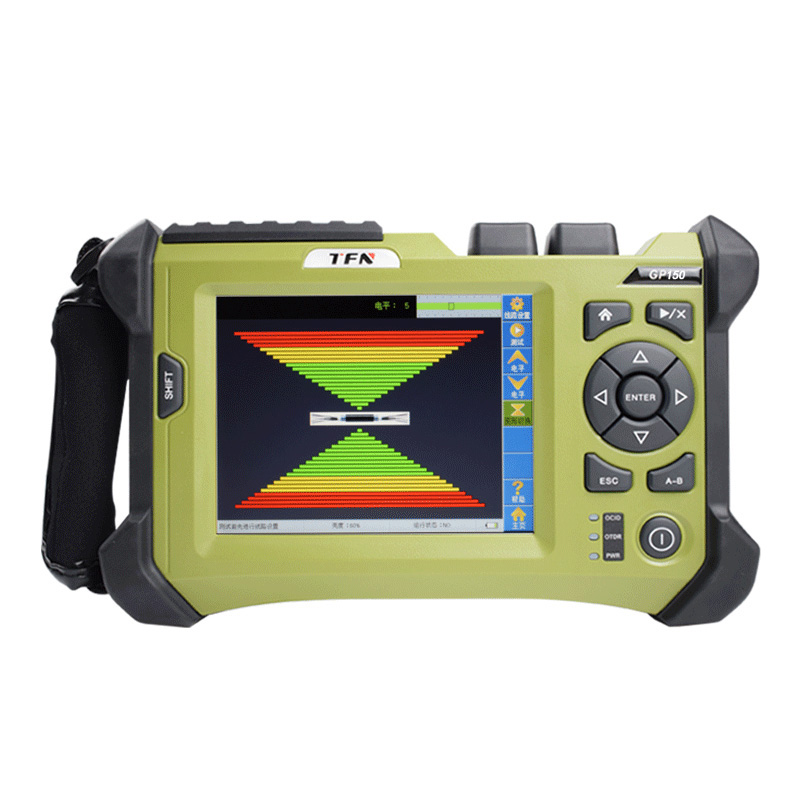
Le TFN a un identificateur de câble optique avancé, Si vous êtes intéressé par ce produit ou si vous souhaitez obtenir plus d'informations sur le testeur d'acide, veuillez contacter l'équipe d'assistance TFN :
Courriel : info@tfngj.com
WhatsApp : +86-18765219251
Ou vous pouvez laissez-nous un message ici.