





Principios físicos fundamentales y análisis de ingeniería
Todo el campo de la comunicación por fibra óptica se basa en un fenómeno óptico fundamental: la Reflexión Interna Total (TIR). Este principio permite guiar la luz a distancias asombrosas (cientos o incluso miles de kilómetros) dentro de una delgada hebra de vidrio con pérdidas mínimas.
Desde el punto de vista de la ingeniería, la condición para la TIR se rige por la ley de Snell. Cuando la luz pasa de un medio más denso (el núcleo de la fibra, con un índice de refracción n₁) a un medio menos denso (el revestimiento, con un índice de refracción n₂), se refracta en un ángulo. El ángulo crítico (θ_c) es el ángulo incidente a partir del cual toda la luz se refleja de nuevo en el núcleo, y se define por:
sin θ_c = n₂ / n₁ (donde n₁ > n₂).
Para que se produzca la TIR, el ángulo de incidencia del rayo de luz dentro del núcleo debe ser mayor que este θ_c calculado. El control preciso de la diferencia de índice de refracción entre el núcleo y el revestimiento es, por tanto, el primer y más crítico parámetro en el diseño de fibras ópticas. El confinamiento de la luz no es perfecto; parte de la energía existe como campo evanescente que penetra ligeramente en el revestimiento, un factor crucial para el diseño de acopladores y sensores.
Una métrica de rendimiento clave derivada de esta diferencia de índice es la apertura numérica (NA), que define la capacidad de captación de luz y el cono de aceptación de la fibra. Se calcula como
NA = sen θ_a = √(n₁² - n₂²)
Un NA más alto permite acoplar más luz a la fibra, pero puede provocar dispersión multimodo, lo que limita el ancho de banda. Las fibras monomodo de telecomunicaciones modernas suelen tener un NA bajo (en torno a 0,1-0,2), lo que optimiza tanto la eficiencia de acoplamiento como la integridad de la señal de alta velocidad y larga distancia.
Evolución más allá de la simple reflexión: Estructuras fotónicas y diseño avanzado de fibras
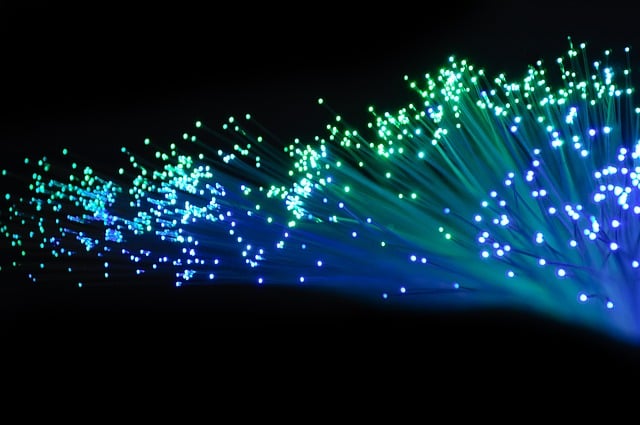
Mientras que las fibras de núcleo sólido tradicionales se basan en el contraste de índices entre las capas de vidrio de sílice dopado, los diseños de fibra avanzados manipulan la luz utilizando estructuras fotónicas más sofisticadas[1].
La investigación sobre fibras de cristal fotónico (PCF) y reflectores estructurados ha demostrado que es posible diseñar bandas de reflexión omnidireccionales. Un estudio publicado en Optical and Quantum Engineering demostró que un cristal fotónico unidimensional deformado (una pila de reflectores de Bragg) podía actuar como espejo omnidireccional cubriendo las longitudes de onda clave para las telecomunicaciones de 1,3 y 1,55 µm[1]. Del mismo modo, un artículo publicado en 2021 en Applied Nanoscience detallaba una estructura de cristal fotónico Octonacci que utilizaba sílice fundida y un material superconductor (YBCO) para crear un reflector de alta eficacia en longitudes de onda de 650, 850, 1300 y 1550 nm[2]. Estas estructuras de ingeniería ofrecen un control superior sobre las propiedades de reflexión en comparación con el simple TIR interfacial.
La búsqueda de mayores capacidades y nuevas posibilidades ha impulsado el desarrollo de dos tipos de fibra revolucionarios:
- Fibras multinúcleo (MCF): Estas fibras incorporan múltiples núcleos independientes dentro de un único revestimiento, multiplicando la capacidad mediante multiplexación por división espacial (SDM). Los principales investigadores de telecomunicaciones, como los equipos de NTT, están desarrollando fibras con hasta 12 núcleos para superar el límite de capacidad previsto de ~100 Tbit/s de las fibras mononúcleo[3]. La diafonía entre núcleos es un importante reto de ingeniería que se resuelve diseñando núcleos “desacoplados” con suficiente separación o núcleos “acoplados” que utilizan procesamiento avanzado de señales (MIMO) para separar las señales.
- Fibras de núcleo hueco (HCF): En un cambio de paradigma, estas fibras guían la luz a través de un núcleo de aire o vacío, confinándola mediante un efecto antirresonante o de banda prohibida fotónica en lugar de TIR. Esto reduce los efectos no lineales y la latencia. Los prototipos más recientes han logrado pérdidas notablemente bajas: un estudio de 2024 señala 0,03 dB/m a 620 nm[5]. Esto las hace prometedoras para el suministro de láseres de alta potencia y futuras redes de pérdidas ultrabajas.
Compromisos de ingeniería: Pérdidas, capacidad y viabilidad del sistema
La elección de una tecnología de fibra requiere un enfoque de ingeniería de sistemas que equilibre el rendimiento físico con limitaciones prácticas como el consumo de energía y la compatibilidad.
Un estudio técnico crítico publicado en el Journal of Lightwave Technology comparó los MCF y HCF para sistemas de cable submarino con limitaciones de potencia[4]. En él se concluía que, aunque los HCF ofrecen menor latencia y no linealidad, sus actuales niveles de atenuación (aunque están mejorando) los hacen menos competitivos que los MCF en la mayoría de los escenarios de alta capacidad a corto plazo. Sin embargo, en enlaces de potencia muy limitada, los HCF podrían ser viables si su atenuación cae por debajo de 0,10 dB/km[4].
En el caso de los MCF, el aumento del número de núcleos eleva directamente la demanda de potencia del sistema, ya que cada núcleo suele requerir su propio amplificador óptico. Una solución innovadora es el amplificador multinúcleo bombeado por revestimiento, que puede amplificar señales en todos los núcleos simultáneamente utilizando una única fuente de bombeo, lo que mejora drásticamente la eficiencia energética[3]. Este enfoque holístico del codiseño de la fibra y el amplificador es esencial para una ampliación sostenible de la red.
Perspectivas de futuro y retos de aplicación
La transición de los prototipos de laboratorio a la infraestructura desplegada se enfrenta a importantes obstáculos. La infraestructura de fibra óptica tiene una vida útil de varias décadas, por lo que la barrera para adoptar un nuevo tipo de fibra es excepcionalmente alta. El éxito depende no sólo del rendimiento de la fibra, sino de la maduración de todas las tecnologías periféricas, entre ellas:
- Empalme y conectividad: Se están desarrollando técnicas de empalme fiables y de bajas pérdidas para fibras nuevas como las HCF[5].
- Amplificadores compatibles: Como ya se ha mencionado, la tecnología de amplificación debe evolucionar a la par que la fibra[3].
- Normalización y costes: deben establecerse normas para toda la industria y procesos de fabricación rentables.
Las hojas de ruta de la investigación apuntan a la comercialización de estas fibras de nueva generación en torno a 2030, en consonancia con la necesidad prevista de redes que puedan soportar el crecimiento masivo de datos procedentes de la IA, la detección avanzada y la conectividad ubicua[3,4].
Referencias técnicas clave
- Ley de Snell y condición TIR: sin θ_c = n₂ / n₁ (Óptica fundamental).
- Apertura numérica: NA = √(n₁² - n₂²) (Principio de la fibra óptica).
- Objetivo de capacidad MCF: >10 veces la capacidad de la fibra monomodo [3]
- Objetivo de pérdida HCF para larga distancia: <0,10 dB/km [4]
- Pérdida baja HCF actual: 0,03 dB/m @ 620 nm [5]
En resumen, la reflexión interna total sigue siendo el principio rector de las redes ópticas globales. Sin embargo, ampliar las fronteras de la capacidad, la latencia y la eficiencia exige ahora que los ingenieros dominen el diseño fotónico avanzado, dominando estructuras que van más allá de la simple TIR para aprovechar el control preciso de la luz que ofrecen los cristales fotónicos, las geometrías multinúcleo y la guía de núcleo hueco.