





En las comunicaciones inalámbricas modernas, los sistemas de radar, las pruebas de cargas útiles de satélites, la investigación cuántica y el desarrollo de módulos de RF, la fuente de señales de microondas -comúnmente denominada generador de señales- desempeña un papel fundamental en la verificación de sistemas y la evaluación del rendimiento. Proporciona señales de RF y microondas estables, espectralmente puras y controlables con precisión, esenciales para la validación en I+D, las pruebas de producción y la integración de sistemas.
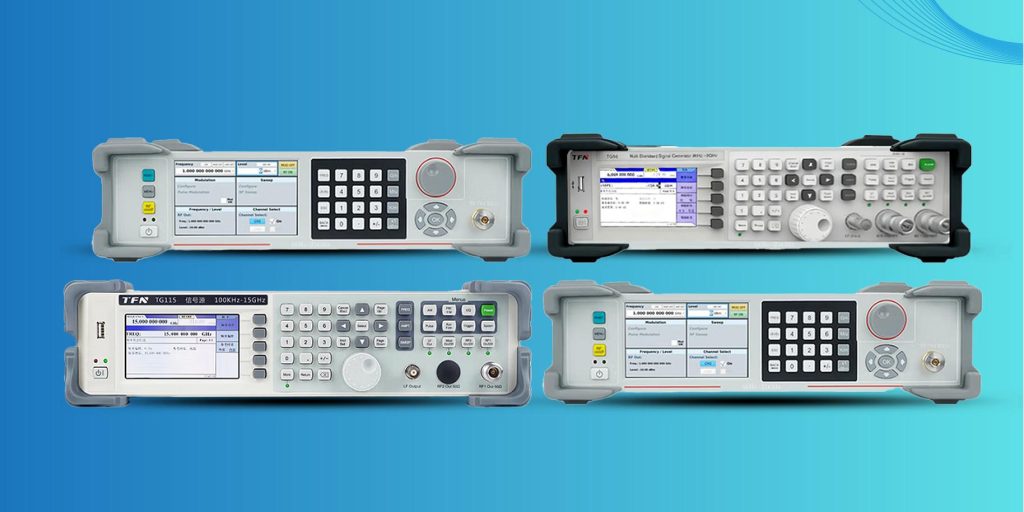
Con una amplia gama de generadores de señales disponibles en el mercado, seleccionar el modelo adecuado puede ser todo un reto. Las especificaciones de rendimiento suelen ser similares sobre el papel, pero su impacto en el mundo real varía significativamente en función de los requisitos de la aplicación. Esta guía se centra en las tecnologías básicas de las fuentes de señal de microondas y explica cómo elegir el instrumento más adecuado en función de las necesidades prácticas de ingeniería. A partir de cuatro ejemplos representativos Modelos TFN-TG96, TG115, TG20A y TG40A-como ejemplos, esbozamos una estrategia de selección clara y realista para ingenieros y profesionales de las pruebas.
Principales factores técnicos que definen una fuente de señales de microondas
Antes de comparar modelos específicos, es esencial comprender los parámetros técnicos que realmente determinan si una fuente de señal se ajusta a un escenario de pruebas determinado.
Gama de frecuencias: La base de cualquier selección
La cobertura de frecuencia es la primera y más fundamental consideración. Un generador de señales debe cubrir totalmente la banda de funcionamiento del dispositivo sometido a prueba, con margen suficiente para la caracterización y futuras ampliaciones.
Para las pruebas generales de RF, incluidos los dispositivos IoT, los sistemas de radiodifusión y la mayoría de los equipos de comunicación por debajo de 6 GHz, suele ser suficiente un rango de frecuencias de kilohercios a 6 GHz. Instrumentos como el TFN TG96 están diseñados para esta categoría y satisfacen las necesidades de la mayoría de las aplicaciones de RF rutinarias.
Sin embargo, las pruebas de microondas y ondas milimétricas plantean exigencias mucho mayores en cuanto a la gama de frecuencias. Aplicaciones como la comunicación por satélite, los sistemas de radar y los frontales de ondas milimétricas 5G requieren a menudo una cobertura de hasta 15 GHz, 21 GHz o incluso más allá de 40 GHz. Modelos como el TG115, TG20A y TG40A permiten realizar pruebas en las bandas Ku, Ka y microondas ampliadas.
Potencia de salida y rango dinámico
La capacidad de potencia de salida afecta directamente al realismo con que una fuente de señal puede simular las condiciones de funcionamiento. Un amplio rango dinámico permite a los ingenieros probar tanto la sensibilidad a señales débiles como la tolerancia a señales de alto nivel con un solo instrumento.
Las fuentes de señal de microondas de alto rendimiento suelen ofrecer niveles de salida desde aproximadamente -120 dBm hasta +17 dBm, con una resolución de amplitud fina y una precisión estable. Esto es especialmente importante en pruebas de sensibilidad de receptores, análisis de compresión de ganancia y flujos de trabajo de calibración. Los modelos TG20A y TG40A destacan en este ámbito, ya que ofrecen una gran potencia de salida combinada con un control preciso del nivel.
Pureza de la señal: Ruido de fase y espurias
La pureza de la señal es uno de los factores más críticos -y a menudo subestimados- en la selección de un generador de señales. El ruido de fase, la distorsión armónica y las emisiones no esenciales influyen directamente en la precisión de las mediciones.
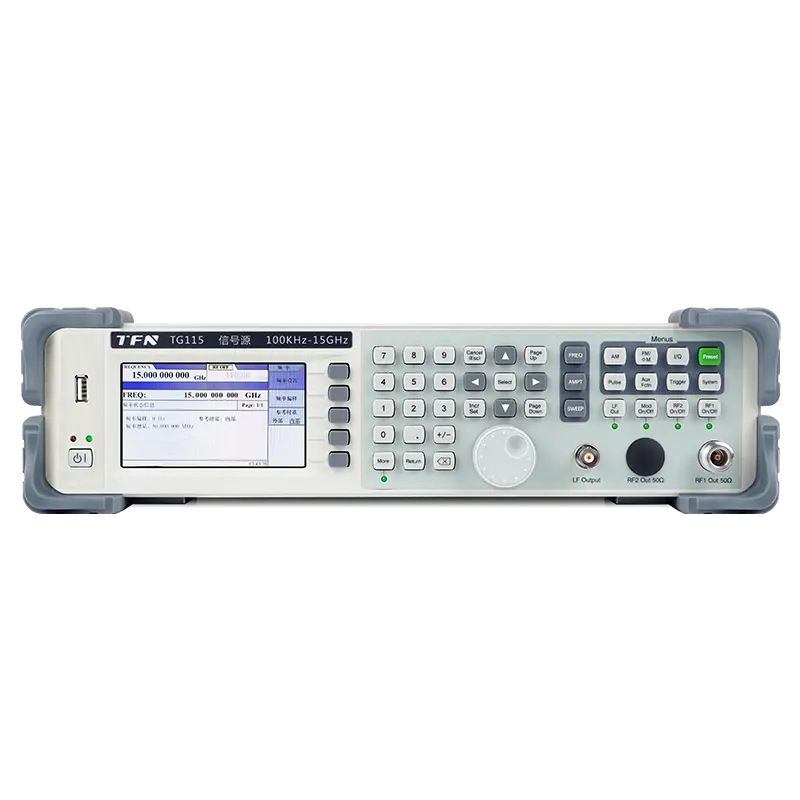
Un ruido de fase bajo es especialmente importante para los esquemas de modulación de alto orden, los receptores de banda estrecha y los sistemas de radar. Un ruido de fase cercano excesivo puede degradar la tasa de bits erróneos (BER), reducir el rendimiento del canal adyacente y limitar la resolución del radar. Por ejemplo, el TFN TG115 consigue un ruido de fase superior a -115 dBc/Hz con un desplazamiento de 10 kHz a 10 GHz, lo que lo hace idóneo para pruebas de receptores de alta sensibilidad y sustitución de osciladores locales de bajo ruido.
Igualmente importantes son los niveles de supresión de armónicos y espurios. Una fuerte supresión de señales no deseadas minimiza las interferencias durante las pruebas y mejora la confianza en los resultados medidos, especialmente cuando se caracterizan dispositivos no lineales o cadenas de RF de alta ganancia.
Capacidad de modulación y flexibilidad de la señal
Las pruebas modernas de RF y microondas rara vez se basan únicamente en portadoras no moduladas. Una fuente de señal práctica debe admitir una amplia gama de formatos de modulación para simular las condiciones de funcionamiento del mundo real.
Los esquemas de modulación analógica, como AM, FM y modulación de fase, siguen siendo fundamentales, mientras que la modulación de impulsos es indispensable para las pruebas de radar y en el dominio del tiempo. Los parámetros clave son la amplitud del pulso, el tiempo de subida y bajada y la relación de encendido/apagado. Para las pruebas de módulos digitales y de comunicaciones, la compatibilidad con formatos de modulación digital comunes como ASK, FSK y PSK amplía aún más la flexibilidad de las aplicaciones.
En este sentido, instrumentos como el TG96 ofrecen una gran versatilidad, combinando múltiples modos de modulación con capacidad de conversión ascendente de señales externas para configuraciones de prueba complejas.
Rendimiento del barrido y eficacia de la medición
Las funciones de barrido de frecuencia y amplitud se utilizan ampliamente para evaluar la respuesta en frecuencia, el ancho de banda y el comportamiento del sistema. Tanto la velocidad de barrido como el control del tiempo de permanencia desempeñan un papel importante.
La conmutación rápida de frecuencias permite realizar pruebas de producción eficaces y mediciones automatizadas, mientras que los tiempos de permanencia más largos son más adecuados para el análisis en estado estacionario y la caracterización precisa. Los modelos de gama alta, como el TG40A y el TG20A, están optimizados para un barrido rápido, lo que los hace ideales para entornos de fabricación en los que el rendimiento es fundamental.
Comparación orientada a la aplicación de los generadores de señales TFN
Comprender las especificaciones es sólo una parte del proceso de selección. En última instancia, lo que determina la elección correcta es adaptar esas especificaciones a las necesidades reales de la aplicación.
El TFN TG96 está diseñado como un generador de señales de RF muy versátil que cubre frecuencias de 9 kHz a 6 GHz. Su amplio soporte de modulación, su capacidad de conversión ascendente externa y su atractiva relación calidad-precio lo convierten en una excelente opción para la educación, los laboratorios generales de I+D, las pruebas de módulos de RF y las aplicaciones de servicio o calibración.
Al entrar en el dominio de las microondas, el TFN TG115 amplía la cobertura de frecuencias hasta 15 GHz y se centra en la pureza de la señal. Su bajo ruido de fase y su buen rendimiento de modulación de impulsos lo hacen idóneo para la investigación en comunicaciones de alta frecuencia, la simulación de señales de radar y las pruebas de componentes de microondas en las que la limpieza espectral es fundamental.
Para los usuarios que necesitan una mayor cobertura de frecuencias y un mayor rendimiento de salida, pero que siguen siendo conscientes de los costes, el TFN TG20A ofrece un equilibrio eficaz. Cubre frecuencias de hasta 21 GHz y ofrece un amplio rango dinámico, una alta potencia de salida y un excelente ruido de fase, por lo que resulta ideal para centros de I+D corporativos, fabricantes de equipos de comunicaciones y sistemas de pruebas de producción.
En el extremo superior de la gama, el TFN TG40A ofrece una cobertura de frecuencias de 9 kHz a 42 GHz, llegando hasta la banda Ka. Con alta potencia de salida, excelente supresión de espurias y capacidad de barrido rápido, está diseñado para aplicaciones exigentes como pruebas de comunicaciones por satélite, investigación de ondas milimétricas, electrónica de defensa y desarrollo de sistemas de radar avanzados.
Estrategia de selección práctica
En la práctica, la selección de una fuente de señal de microondas se reduce a alinear las prioridades de rendimiento con los requisitos reales de las pruebas.
Si sus aplicaciones se limitan a frecuencias inferiores a 6 GHz y requiere una amplia flexibilidad de modulación, el TG96 ofrece una amplia capacidad sin complejidad innecesaria. Para aplicaciones de microondas de hasta 15 GHz en las que el ruido de fase es una preocupación clave, el TG115 es una opción sólida y centrada. Cuando se requiere una mayor cobertura de frecuencias y una mayor potencia de salida dentro de un presupuesto controlado, la TG20A ofrece un excelente compromiso. Para investigación avanzada, sistemas de satélite y pruebas de microondas de banda ancha hasta 42 GHz, el TG40A sigue siendo la solución más completa.
Conclusión
La elección de la fuente de señal de microondas adecuada requiere una evaluación equilibrada de la gama de frecuencias, la pureza de la señal, la potencia de salida, la capacidad de modulación, el rendimiento de barrido y el presupuesto. En lugar de centrarse en las especificaciones de forma aislada, los ingenieros deben considerar cómo afecta cada parámetro a la precisión de las mediciones en el mundo real y a la eficacia de las pruebas.
La cartera de generadores de señales de TFN cubre todo el espectro de necesidades de pruebas de RF y microondas. Desde el multifuncional y rentable TG96, a través de la TG115, de alto rendimiento TG20A y banda ancha TG40A, Cada modelo está optimizado para un conjunto de aplicaciones claramente definido.
Antes de tomar una decisión definitiva, se recomienda verificar las especificaciones clave en los puntos de frecuencia exactos y las condiciones de modulación relevantes para su proyecto. En muchos casos, la combinación de la fuente de señal con las opciones adecuadas, como osciladores de referencia de alta estabilidad o módulos externos de conversión ascendente, puede mejorar aún más el rendimiento y preparar la plataforma de pruebas para el futuro.
👉 Compara especificaciones detalladas de los TG96, TG115, TG20A y TG40A para identificar la fuente de señal de microondas que mejor se adapte a los requisitos de su aplicación.