





En el mantenimiento de sistemas eléctricos, la rápida localización y reparación de averías en los cables es crucial para garantizar la fiabilidad del suministro eléctrico. Un comprobador de averías en cables eficaz y preciso puede reducir significativamente el tiempo de localización de averías y disminuir los costes de mantenimiento. El FB18 Comprobador de averías en cables de TFN, con su diseño sistemático, integración de tecnología avanzada y rendimiento estable, se ha convertido en una configuración preferida en la industria. Este artículo profundizará en los cuatro componentes principales de este instrumento desde la perspectiva de un ingeniero técnico, explicando sus principios de funcionamiento, características funcionales y eficacia de aplicación práctica, proporcionando una valiosa referencia para los profesionales dedicados al mantenimiento de cables.
1. Unidad de medición de distancia: Anfitrión de medición de distancia de avería del cable
El host de medición de la distancia de avería del cable es el “cerebro” de todo el sistema de pruebas, responsable de determinar inicialmente la ubicación aproximada del punto de avería. El host utilizado en el TFN FB18 emplea dos métodos de prueba: El método de impulsos de baja tensión y el método de sobretensión de alta tensión, que cubren varios tipos de averías de alta impedancia, baja impedancia, circuito abierto y cortocircuito en cables de hasta 35 kV.
Su tecnología principal reside en la adquisición de datos a alta velocidad y el análisis inteligente de formas de onda. El host admite una frecuencia de muestreo de hasta 100 MHz, un alcance de ensayo superior a 64 kilómetros y una precisión del sistema controlada en 50 centímetros. La pantalla táctil en color de 8 pulgadas, combinada con un completo menú en chino, hace que el manejo sea intuitivo y sencillo. El instrumento lleva incorporada una batería recargable que permite un funcionamiento continuo durante más de 3 horas sin necesidad de una fuente de alimentación externa, y cuenta con un mecanismo de protección contra sobretensiones de alto voltaje para garantizar la estabilidad del equipo en entornos de campos eléctricos complejos.
En aplicaciones prácticas, este host puede calcular y mostrar automáticamente la distancia de la avería, admite funciones de almacenamiento y comparación de formas de onda, y puede mostrar formas de onda de averías y formas de onda de cables sanos una al lado de la otra, lo que mejora enormemente la eficacia y la precisión de la interpretación. Ya sea para cables subterráneos, líneas aéreas o métodos de instalación híbridos, esta unidad funciona de forma fiable sin puntos ciegos de prueba significativos.
2. Unidad de seguimiento e identificación: Detector de rutas de cables
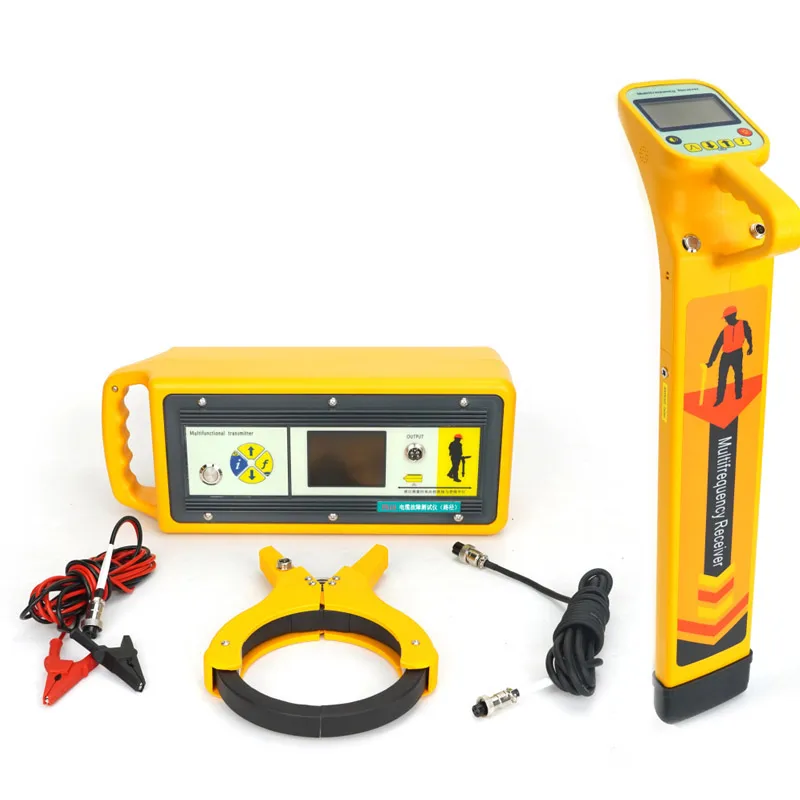
En entornos complejos de tuberías subterráneas, identificar con precisión el cable objetivo y determinar su ruta y profundidad es un requisito previo para la localización de averías. El Detector de Trayectorias de Cables incluido en el FB18 consta de un transmisor y un receptor que utilizan tecnología de inducción electromagnética totalmente digital con capacidades de transmisión y recepción multifrecuencia que van de 577 Hz a 133 kHz.
El transmisor admite tres modos de aplicación de la señal: conexión directa, inducción y conexión de pinza, adecuados para el trazado de rutas en cables energizados y desenergizados. El receptor ofrece tres modos de posicionamiento: pico, pico ancho y nulo, que permiten medir en tiempo real la profundidad del cable, la magnitud de la corriente y la dirección de la ruta, con una precisión de posicionamiento de 5% de profundidad. Su control de ganancia inteligente y la interfaz de pantalla de alto brillo hacen que las operaciones de campo sean más manejables.
Esta unidad destaca especialmente en la resolución de retos difíciles para los instrumentos tradicionales, como las averías metálicas por cortocircuito muerto y el trazado de rutas de cables en tensión, mejorando significativamente el porcentaje de éxito de la identificación de cables en entornos complejos y sentando las bases para la posterior localización precisa.
3. Unidad de localización de averías: Localizador de averías por cable
Tras la medición de la distancia y la determinación de la ruta, el objetivo final es la localización precisa del punto de avería. El localizador de averías en cables del FB18 integra los modos de sincronización acústico-magnética y de tensión de paso, y se caracteriza por su gran capacidad antiinterferente y su alta sensibilidad.
El instrumento utiliza una pantalla en color de 4,3 pulgadas de alto brillo para mostrar las formas de onda acústicas y la intensidad de la señal electromagnética en tiempo real, y admite la indicación de la distancia de la avería (hasta 25 metros). Su tecnología combinada de filtrado digital y filtrado analógico pasivo resalta eficazmente el sonido de descarga en el punto de la avería a la vez que suprime el ruido ambiental. Las exclusivas funciones de mejora de graves y reducción inteligente del ruido electromagnético pueden filtrar automáticamente el ruido de alta frecuencia y restablecer rápidamente el volumen cuando se detecta una señal electromagnética, reduciendo la fatiga auditiva.
En el modo de tensión por pasos, el instrumento muestra los cambios de señal mediante formas de onda continuamente refrescadas, combinadas con un ajuste de ganancia multirrango, lo que facilita la captura de señales de avería débiles. Este pinpointer es adecuado para la localización final precisa de diversas averías en cables, con un rendimiento excepcional especialmente en emplazamientos urbanos o industriales ruidosos.
4. Unidad de señal de alta tensión: Generador ultraligero de señales de alta frecuencia y alto voltaje
El generador de señales de alta tensión proporciona la energía necesaria para la prelocalización de averías y es un equipo clave para las pruebas del método de flameo por sobretensión. El generador de señales de alta tensión de alta frecuencia ultraligero que se incluye con el FB18 utiliza la tecnología de aumento electrónico de la fuente de alimentación conmutada, presenta un tamaño compacto y un peso de solo 11 kg, lo que facilita su transporte y conexión in situ.
Este dispositivo puede emitir hasta 32 kV de tensión continua negativa, cuenta con regulación automática de tensión y protección contra cortocircuitos y aperturas. Una pantalla LCD en color muestra la tensión de salida en un formato dinámico tipo brújula, proporcionando un funcionamiento intuitivo y seguro. Su energía de descarga puede alcanzar los 1200 julios/5 segundos, con un ciclo de descarga mínimo de 3 segundos, proporcionando suficiente energía de excitación para las faltas de alta impedancia y flashover para asegurar una adecuada ruptura en el punto de falta y generar señales detectables.
Conclusión
El comprobador de averías en cables TFN FB18 constituye una solución completa que abarca todo el proceso de localización de averías mediante la combinación orgánica de cuatro unidades: medición de la distancia de la avería, trazado de la ruta, localización precisa y excitación de alta tensión. Las unidades se complementan entre sí técnicamente y cooperan operativamente, siendo capaces de realizar tareas especializadas de forma independiente, así como de trabajar juntas sistemáticamente, mejorando significativamente la eficiencia y precisión de la localización de averías.
Este sistema es especialmente adecuado para el mantenimiento y la reparación de emergencia de cables eléctricos de 35 kV e inferiores. Su diseño inteligente reduce la dependencia de la experiencia del operario y mejora la adaptabilidad y fiabilidad en distintos entornos. Para el personal técnico dedicado a la operación y el mantenimiento de cables, la comprensión de los principios de sus componentes básicos y la forma de utilizarlos de forma coordinada mejorarán poderosamente las capacidades de gestión de averías de emergencia, garantizando el funcionamiento seguro y estable de la red eléctrica.
Si necesita conocer más detalles de Sistema de comprobación de averías en cables TFN FB18, Póngase en contacto con el EQUIPO de asistencia de TFN:
Correo electrónico: info@tfngj.com
WhatsApp: +86-18765219251