





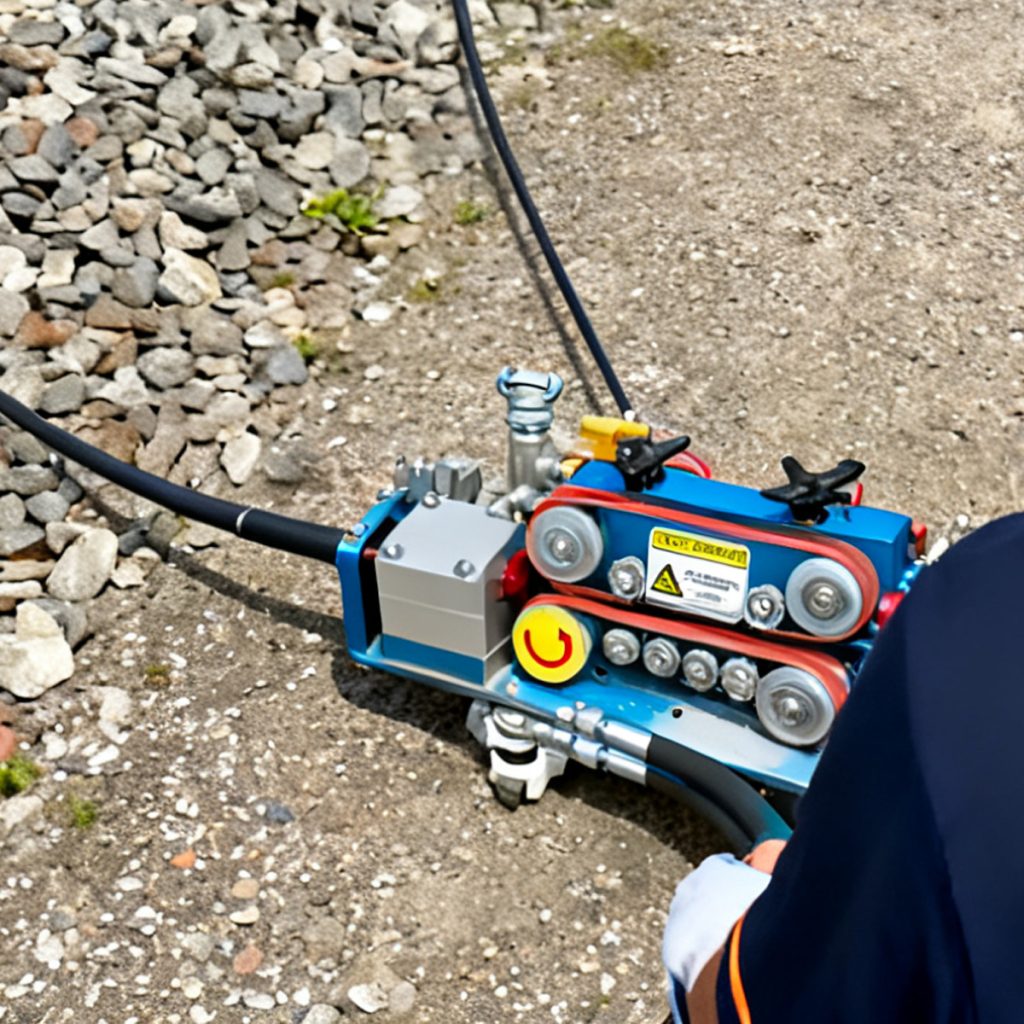
As a fiber optic cable installer with years of field experience, I understand the many challenges posed by traditional cable pulling methods—long project timelines, high labor intensity, susceptibility of cables to damage, and numerous terrain limitations. These issues are especially pronounced in complex urban environments or long‑distance backbone projects. It wasn’t until our team adopted the TFN T700CQ Pneumatic Cable Blowing Machine that we achieved a qualitative leap in both installation efficiency and project quality.
Why Choose Pneumatic Cable Blowing?
In the field of fiber optic cable installation, cable blowing machine has long been synonymous with high efficiency and low damage. Compared with conventional mechanical pulling, pneumatic blowing uses compressed air to “jet” the cable through the duct, keeping the cable in a suspended state with almost no tensile force. This greatly reduces friction damage to the cable sheath and micro‑bend loss inside the fiber.
The TFN T700CQ is precisely such a professional‑grade pneumatic cable blower. It is particularly suitable for micro duct blowing, fiber optic cable installation, and long‑distance cable laying. In actual construction, we have clearly experienced the following advantages:
Enhanced Installation Efficiency, Shortened Project Timelines
The TFN T700CQ can reach a maximum blowing speed of 120 meters per minute, meaning it can install over 7 kilometers of cable in one hour. Especially in urban Fiber‑to‑the‑Home (FTTH) or backbone network expansion projects, where construction windows are limited, efficient pneumatic blowing significantly reduces road‑occupancy time and minimizes disruption to public life.
Significantly Reduced Cable Damage and Signal Attenuation
The machine is equipped with an adjustable conveyor belt that adapts pressure according to the cable diameter, avoiding indentations or stretching of the sheath and fiber core. During blowing, the cable remains in a “free‑floating” state with almost no long‑term tension, which is crucial for ensuring cable lifespan and signal transmission quality.
Adaptability to Various Cable and Duct Types
Whether it is standard GYTA cable, non‑armored GCYFY micro cable, or 10/8mm HDPE micro ducts, the T700CQ handles them all. It supports simultaneous blowing of 1–2 micro ducts, making it ideal for capacity expansion in existing conduits and achieving “multiple cables per duct,” which notably improves duct utilization.
Reduced Manual Labor and Improved Operational Safety
The unit weighs only 28 kg and comes with an aviation case for easy transport and deployment. The pneumatic drive requires no external power supply, making it safer for use in damp, remote, or power‑scarce environments. The intuitive interface with variable speed control allows even beginners to operate it after brief training.
Value of the TFN T700CQ in Typical Application Scenarios
High‑Density Urban Fiber Network Deployment
In old urban areas or locations with complex underground pipelines, traditional trenching and laying are costly, time‑consuming, and socially disruptive. Using the T700CQ, micro cables or micro ducts can be blown directly into existing conduits, enabling “trenchless expansion” that significantly reduces restoration costs and public complaints.
Long‑Distance Backbone Cable Installation
In cross‑regional backbone projects, we have completed continuous blowing runs exceeding 2,000 meters. With stable thrust (up to 700N) and paired with the recommended air compressor (10–15 m³/min, 12–15 bar), the machine enables high‑speed, continuous, low‑loss cable placement—especially suitable for long‑haul backbone construction under national broadband strategies.
Micro Duct and Micro Cable System Construction
Faced with limited duct resources, we often adopt a phased construction approach: “install micro ducts first, blow cables later as needed.” The T700CQ can blow 1-2 micro ducts simultaneously, reserving space for future network upgrades and achieving “one‑time construction, long‑term benefits.”
Challenging Terrain and Emergency Repairs
In complex terrain such as mountainous regions or wetlands, mechanical pulling easily causes cable twisting and sheath abrasion. Pneumatic blowing relies on airflow for propulsion, adapts well to duct bends, and effectively reduces installation risks. Moreover, the machine’s quick‑deployment feature makes it an excellent choice for emergency cable restoration.
How to Maximize the Performance of the TFN Cable Blowing Machine?
1. Choosing the Right Air Compressor: We recommend a diesel‑powered screw air compressor with an output of 10–15 m³/min and pressure of 12–15 bar to ensure a continuous, stable air supply.
2. Lubrication and Maintenance: Using dedicated blowing lubricant during operation further reduces friction and extends the life of both ducts and cables. The machine itself requires regular cleaning of seals, inspection of the conveyor belt, and lubrication of the pneumatic motor.
3. Personnel Training: Although operation is straightforward, we recommend basic training for installers to master speed adjustment, seal replacement, and common troubleshooting, thereby enhancing safety and equipment service life.
Conclusion: Pneumatic Blowing Drives High‑Quality Development of Communication Infrastructure
Against the backdrop of “New Infrastructure” and all‑optical network construction, efficient, intelligent, and low‑damage cable installation methods have become an industry necessity. The TFN T700CQ Pneumatic Cable Blowing Machine is not merely a construction tool; it is a key enabler for rapid fiber network deployment, lower lifecycle costs, and long‑term network reliability.
From our practical experience, after adopting pneumatic blowing technology, overall project construction costs dropped by approximately 30%, and cable failure rates decreased by more than 50%. The machine is particularly well‑suited for projects such as 5G fronthaul, data‑center interconnects, smart cities, and rural broadband expansion.
If you are looking for a reliable, efficient, and versatile pneumatic cable blowing machine, the TFN T700CQ is undoubtedly a trustworthy professional choice. It is more than just a machine—it is a powerful partner for cable installers moving toward efficient construction and high‑quality project delivery.
Information of TFN Support Team:
Email: info@tfngj.com
WhatsApp: +86-18765219251